M1: Mind Improvisation II: Real-Time Conceptual Transformation through fNIRS and MAX/MSP
Hyo Jee Kang, Jinok Cho, Joohun Lee, Jisun Ham
Korea National University of Transportation
Hyo Jee Kang (강효지) Role: Composer & Performer — composotion, performance, biomedical-media research Bio: Hyo Jee Kang is an associate professor at Korea National University of Transportation and an active pianist and performer. Trained in Korea and Germany (DMA, Konzertexamen), she combines piano performance with media art, biomedical-signal projects (e.g., fNIRS-based studies), VR/AR, and interdisciplinary collaborations that fuse music, technology, and performance.
Jinok Cho (조진옥) Role: Sound Artist & Audio Realizer — specializes in audio realization, Max/MSP programming, and live signal processing. Bio: He is a Composer and Sound designer (formerly a researcher at Seoul National University Arts & Science Center) who produces electroacoustic and multimedia works. His projects focus on immersive audio design using Max/MSP and live processing, fixed media, and experimental soundscapes that often reinterpret Korean traditional narratives such as Sugunga.
Joohun Lee (이주헌) Role: Media Artist — visualization, interactive media, and AR/VR/new-media content development. Bio: Juhun Lee is a professor at Dong-Ah Institute of Media & Arts specializing in visualization and interactive media. He develops immersive visualization systems, AR/VR environments, and collaborative metaverse/virtual-space projects while teaching new-media content production and real-time media techniques.
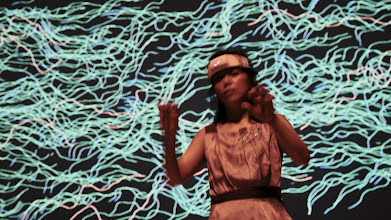
Mind Improvisation II,' building on the concepts of 'Mind Improvisation' and 'Growing Seeds,' merges neural signal processing with embodied performance.Using a 15-channel functional near-infrared spectroscopy (fNIRS) device (NIRSIT Lite), the performer's prefrontal cortex activity is streamed live to a custom Max/MSP environment. The performer's ΔHbO signals are interpreted not as binary triggers but as expressive, continuous parameters—modulating filters, synthesis engines, and real-time audio morphing tools. Simultaneously, a Yamaha Disklavier fulfills a dual role: As a readymade improviser, it acoustically replays pre-recorded performances—the “ghost” layer. As a live acoustic instrument, it is physically played by the performer in real time. These layers—brain-driven synthesis and live/automated piano—are recursively shaped by the performer's evolving neural states. Auditory output and visual feedback, in turn, influence the brain, forming a perceptual-cognitive feedback loop. The system embodies the concept of transformation as both process and event, echoing the principles of Process Art and Deleuzian deterritorialization. Brain signals are treated not as mere control data but as an expressive medium, enabling a decentered and emergent artistic language. This work challenges conventional authorship by positioning the brain as both subject and source of the performance. The audience witnesses an improvisation sculpted by moment-to-moment mental fluctuations, transforming not a metaphor, but an immediate, embodied experience